Dealing with stubbornly spotty glasses and a white film on your dishes can be incredibly frustrating, making you wonder if your dishwasher is even working. If you live in an area with hard water, you’re not alone in this battle. Hard water, characterized by high levels of dissolved minerals like calcium and magnesium, reacts negatively with detergents, leaving behind unsightly residue and hindering your dishwasher’s performance. But what if there were detergents specifically designed to combat these mineral villains, promising sparkling clean results every time? This guide will dive into the science behind hard water’s impact on your dishes and dishwasher, reveal the essential ingredients to look for in effective detergents, and recommend the top performers for hard water areas in 2026, ensuring your kitchenware emerges brilliantly clean.
Understanding Hard Water and Its Impact on Your Dishwasher
Hard water is a common household issue across much of North America, where nearly 85% of the United States experiences it to some degree. It’s essentially water that contains elevated concentrations of dissolved minerals, primarily calcium and magnesium. While not a health concern, these minerals can create significant problems for your dishwasher and dishes. When hard water flows through your appliance, these minerals disrupt the balanced chemistry needed for detergents to work effectively. Instead of fully dissolving and rinsing away, detergent can bind with these hardness minerals, forming a residue that settles on your dishes and inside the machine itself.
The signs of hard water are often unmistakable. You might notice a white, cloudy film on your glasses, silverware, and plates, even after a full wash cycle. Beyond the visible spots, hard water takes a toll on your dishwasher’s internal components. Over time, these mineral deposits, known as limescale, accumulate on heating elements, spray arms, and the dishwasher filter. This buildup restricts water flow, reduces the machine’s ability to maintain optimal temperatures, and ultimately lowers cleaning efficiency while increasing energy consumption. In severe cases, hard water can even cause a permanent “etching” effect on glassware, making them appear perpetually cloudy. The constant exposure to these minerals also accelerates wear and tear on vital parts, potentially shortening your dishwasher’s lifespan by up to 50% if left untreated.
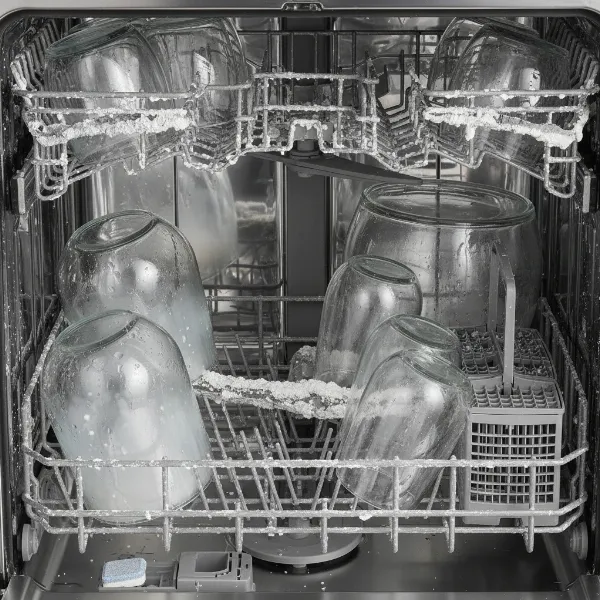 Hard water causing white film and limescale buildup in a dishwasher interior, with cloudy dishes
Key Ingredients and Formulations for Hard Water Detergents
To effectively combat the challenges of hard water, dishwasher detergents incorporate specific ingredients and utilize advanced formulations. The primary goal is to neutralize or sequester the calcium and magnesium ions that cause hardness, allowing the cleaning agents to do their job without interference.
One of the most crucial components in hard water detergents are water softeners. These are typically sodium-based chemicals that work by exchanging ions with the hard water minerals, preventing them from binding with the detergent. Common examples include:
- Sodium Carbonate (Washing Soda): A powerful alkali that helps to soften water and boost cleaning.
- Sodium Citrate: A chelating agent that binds to metal ions in hard water, preventing them from forming insoluble precipitates.
- Borax: Another natural mineral that acts as a water softener and cleaning booster.
- Citric Acid: Often found in natural detergents, citric acid is effective at dissolving mineral deposits and preventing spots.
Enzymatic formulas are also highly beneficial. These detergents contain enzymes that break down food particles and grease, which is particularly important in hard water conditions where detergent efficacy can be compromised. Furthermore, certain types of surfactants, especially nonionic surfactants, are less affected by the presence of multivalent ions in hard water, ensuring better cleaning performance.
When it comes to the form of detergent, pods and tablets generally outperform traditional powders and gels, especially in hard water areas. These concentrated, pre-measured forms often combine multiple cleaning agents, rinse aids, and water softeners in a single convenient dose. They are designed for precise ingredient release throughout the wash cycle, maximizing their effectiveness against mineral buildup and food residues. While gel detergents are typically at the lower end of performance for hard water, some newer formulations specifically target hard water issues.
Top Dishwasher Detergents for Hard Water Areas (2026)
Choosing the right detergent can make all the difference in achieving sparkling dishes, even with hard water. Here are some of the best dishwasher detergents recommended for 2026, known for their ability to tackle hard water challenges:
1. Cascade Platinum Plus ActionPacs
|
Our Picks for the Best Dishwasher in 2026
As an Amazon Associate I earn from qualifying purchases.
|
||
| Num | Product | Action |
|---|---|---|
| 1 | Sharp SDW6504MS Stainless Steel Dishwasher, 24-inch Pocket Handle, 52 dB, Hybrid Tub, 12 Place Settings, 5 Cycles, Heated Dry |

|
| 2 | EUHOMY Countertop Dishwasher Portable with 6 Programs, 5L Built-in Water Tank for Apartments & RV, 167℉ High-Temp, No Hookup Needed, Mini Dishwasher with Baby Care, Air Dry/Quick/ECO/Fruit/Normal Mode |
|
| 3 | BLUELAND 100% Plastic-Free Dishwasher Detergent Tablets, 60 Count, Free & Clear, Eco-Friendly Dishwashing Pods, Natural, USDA Certified biobased |
|
| 4 | Cascade Complete Dishwasher Pods - Fresh Scent ActionPacs, Dishwasher Detergent, Dishwasher Soap, Detergent Pods, 78 Count |
|
| 5 | COMFEE’ Portable Mini Dishwasher, Energy Star, Countertop, 6 Place Settings, with 8 Washing Programs, Speed, Baby-Care, ECO& Glass, Dish Washer for Dorm, RV& Apartment, White |
|
| 6 | COMFEE’ Countertop Dishwasher, Energy Star Portable Dishwasher, 6 Place Settings & 8 Washing Programs, Speed, Baby-Care, ECO& Glass, Dish Washer for Dorm, RV& Apartment, Black |
|
| 7 | Kenmore 24" Premium Hybrid Tub Dishwasher - UltraWash, MoreSpace Adjustable Rack, High Temp & SmartWash - 12 Place Settings - 54 DBA - ENERGY STAR Certified - Fingerprint Resistant Stainless Steel |
|
| 8 | Honeywell 18 Inch Dishwasher with 8 Place settings, 6 Washing Programs, Stainless Steel Tub, UL/Energy Star- Black |
|
| 9 | Cascade Platinum Plus Dishwasher Pods, Dish Detergent Soap, Clean Scent, 62 Count |
|
| 10 | Cascade Complete Dishwasher Detergent Liquid Gel, Dish Detergent, Dishwasher Soap, Citrus, 75oz |
|
Cascade Platinum Plus ActionPacs are consistently praised for their robust cleaning power, especially against tough stains and hard water residue. These all-in-one pods come with upgraded formulas that effectively remove stuck-on food and prevent spots and streaks on dishes, silverware, and glasses. Many users with hard water report significant improvements, noting that dishes emerge spotless and even the dishwasher interior appears cleaner. The formula often includes ingredients like sodium carbonate to help with water softening.
2. Finish Quantum Ultimate Clean & Shine / Ultimate Tabs
Finish Quantum Ultimate Clean & Shine tablets are another top contender. These multi-chamber pods feature a special proprietary technology that releases different ingredients at optimal times during the wash cycle, including a powerful rinse aid center. This design is particularly effective in harder water, minimizing spotting and filming. The enzyme-based formula excels at obliterating stubborn food residues and leaves everything exceptionally shiny and spotless. Finish also offers a Hard Water Booster Powder for those needing an extra kick.
3. Lemi Shine Natural Dishwasher Detergent / Booster
For those seeking a more natural solution that still performs excellently in hard water, Lemi Shine is a strong choice. Their natural dishwasher detergent, often available in dual-chamber packs, utilizes citric acid and sodium carbonate to power through messes and hard water mineral deposits. Citric acid is known for its ability to cut through grease and hard water residue, leaving dishes sparkling. Lemi Shine also offers a dedicated Dish Detergent Booster, which can be added alongside your regular detergent for enhanced hard water spot removal.
4. Grab Green Natural Automatic Dishwashing Detergent Powder
If an eco-friendly and non-toxic option is a priority, Grab Green Natural Automatic Dishwashing Detergent Powder is highly recommended. This fragrance-free powder is free from harsh chemicals like parabens, phosphates, and chlorine, yet it’s highly effective in hard water due to its various sodium-based ingredients. For very hard water, the manufacturer often recommends using a full scoop. Many users report excellent results without the need for an additional rinse aid.
5. Ecover Automatic Dishwashing Tablets Zero
Ecover offers another eco-conscious option with their Automatic Dishwashing Tablets Zero. These fragrance and dye-free tablets boast a plant and mineral-based formula designed to break down stuck-on foods and messes. They are biodegradable and phosphate-free, making them a gentler choice for the environment. Customers with hard water have found Ecover to be effective, though some reviews mention it occasionally leaving a film if not used with a proper rinse aid.
6. Seventh Generation Power Plus Dishwasher Detergent Packs
Seventh Generation is known for its commitment to plant-based ingredients and powerful cleaning without harsh chemicals. Their Power Plus Dishwasher Detergent Packs are designed to tackle tough food stains and fight hard water residue. Available in fragrance-free and lemon scents, these packs are a reliable option for achieving clean dishes in challenging water conditions.
7. Blueland Dishwasher Detergent Tablets
Blueland provides an innovative, eco-friendly solution with their refillable Dishwasher Detergent Tablets. These tablets are plastic-free, highly concentrated, and designed for effective cleaning, including in hard water areas. They are a great choice for consumers looking to reduce their environmental footprint while still achieving sparkling dishes.
Here’s a comparison of these top detergents:
| Detergent Brand & Product | Type | Key Hard Water Ingredients/Features | Pros | Cons |
|---|---|---|---|---|
| Cascade Platinum Plus ActionPacs | Pods | Advanced cleaning agents, water softeners | Excellent on tough stains, prevents spots, cleans dishwasher | Can be pricier |
| Finish Quantum Ultimate Clean & Shine | Tablets/Pods | Multi-chamber with rinse aid, enzyme-based formula | Superior spot prevention, powerful cleaning, very shiny results | Some users note strong fragrance |
| Lemi Shine Natural Dishwasher Detergent | Powder/Packs | Citric acid, sodium carbonate | Natural ingredients, effective against residue, boosts shine | May require booster for very hard water |
| Grab Green Natural Automatic Dishwashing Powder | Powder | Sodium-based ingredients | Non-toxic, eco-friendly, budget-friendly, effective | May require full scoop for extreme hard water |
| Ecover Automatic Dishwashing Tablets Zero | Tablets | Plant & mineral-based formula, biodegradable | Eco-friendly, fragrance-free, gentle | Some users report film without rinse aid |
| Seventh Generation Power Plus Packs | Packs | Plant-based, fights tough stains and hard water residue | Free of harsh chemicals, effective, environmentally conscious | |
| Blueland Dishwasher Detergent Tablets | Tablets | Plastic-free, concentrated formula | Eco-friendly, reduces waste, effective in hard water |
Beyond Detergent: Essential Tips for Hard Water Dishwashing
While a specialized detergent is a cornerstone of battling hard water, integrating a few additional practices can dramatically improve your dishwashing results and protect your appliance.
Using Rinse Aid
A high-quality rinse aid is crucial in hard water areas. Products like Finish Jet Dry are specifically designed to help water sheet off dishes, preventing droplets from drying and leaving behind mineral spots and streaks. This is especially important for achieving spotless glasses and cutlery. Many modern detergents, particularly pods, include a rinse aid in their formulation, but an additional rinse aid can provide an extra layer of protection against hard water effects.
The Role of Dishwasher Salt
If your dishwasher has a dedicated salt reservoir (common in European models but also found in some North American units), using dishwasher salt is highly recommended for hard water. Dishwasher salt, which is different from table salt, effectively softens the water as it enters the appliance by neutralizing calcium and magnesium minerals. This action helps detergent dissolve more effectively, prevents limescale buildup inside the machine, and ensures residue-free dishes. For the salt to be truly effective, particularly with very hard water, the hardness must already be considerably reduced, perhaps by an external water softener.
Consider a Whole-Home Water Softener
For the most comprehensive solution to hard water, consider installing a whole-home water softener or a point-of-use system for your dishwasher. These systems remove hardness-causing minerals from your water supply before it even reaches your appliances. A water softener can extend the useful life of your dishwasher by up to 50% and significantly reduce the amount of detergent needed (by more than 50% in some cases) to achieve the same or better cleaning results. This investment not only benefits your dishwasher but all water-using appliances and plumbing throughout your home, leading to long-term savings and improved water quality.
> “While specialized detergents can make a significant difference, for truly challenging hard water, a whole-home water softener is the most effective long-term solution. It protects your entire plumbing system and dramatically enhances the performance of all your water-using appliances.” – Dr. Eleanor Vance, Environmental Chemistry Expert
Run Hot Water First
Before starting your dishwasher cycle, run the hot water in your kitchen sink until it’s consistently hot. This ensures that your dishwasher immediately receives hot water at the beginning of its cycle, which is essential for detergents to dissolve and activate properly, especially when tackling tough stains and minerals.
Regular Dishwasher Maintenance
Even with the best detergents and water softening efforts, regular maintenance is key. Periodically clean your dishwasher’s filter, spray arms, and interior to remove any accumulated food particles or mineral deposits. Many dishwasher cleaning tablets or descaling solutions are available that specifically target limescale buildup, helping to maintain your appliance’s efficiency and longevity.
Choosing the Right Detergent for Your Home
Selecting the ideal dishwasher detergent for hard water involves a bit more than just grabbing the first brand you see. It requires understanding your specific needs and the unique characteristics of your home’s water.
Assess Your Water Hardness: The first step is to determine the hardness level of your water. You can purchase a home water test kit, often available at hardware stores or online. Knowing your water’s grain per gallon (gpg) measurement will guide your detergent choice and help you decide if additional solutions like dishwasher salt or a water softener are necessary. For instance, water with more than 120 mg/L of dissolved minerals (or approximately 7 gpg) is considered hard.
Consider Eco-Friendly/Non-Toxic Options: If environmental impact and ingredient transparency are important to you, many effective eco-friendly detergents now exist. Brands like Grab Green, Ecover, Seventh Generation, and Blueland offer powerful cleaning without harsh chemicals, making them excellent choices for a greener home. Ensure these brands still explicitly state their effectiveness in hard water.
Budget vs. Performance: While some premium detergents may offer superior performance, there are also budget-friendly options that deliver impressive results in hard water. Consider the cost per load and weigh it against the effectiveness you experience. Sometimes, a slightly more expensive detergent that eliminates re-washing or the need for extra additives can be more cost-effective in the long run.
By carefully considering your water hardness, desired ingredient profile, and performance expectations, you can confidently choose a dishwasher detergent that will leave your dishes impeccably clean and your dishwasher running smoothly for years to come.
Conclusion
Living in a hard water area doesn’t mean you have to settle for cloudy glasses or spotty dishes. With the right knowledge and products, achieving spotless results is entirely possible. Understanding how minerals impact your dishwasher and choosing detergents specifically formulated with water-softening agents like sodium carbonate, sodium citrate, or citric acid is the first step towards a sparkling kitchen. Brands like Cascade Platinum Plus, Finish Quantum Ultimate, and Lemi Shine consistently rise to the top for their ability to tackle tough hard water challenges in 2026.
Beyond the detergent itself, incorporating a quality rinse aid, utilizing dishwasher salt where applicable, and considering a whole-home water softener are powerful strategies to ensure your dishes are not just clean, but truly pristine. Don’t let hard water diminish the joy of a perfectly clean kitchen. Empower yourself with these solutions and transform your dishwashing experience. What steps will you take today to conquer hard water in your home?
Frequently Asked Questions
What is the best dishwasher detergent for hard water that leaves no spots?
For truly spotless results in hard water, many experts and users recommend detergents like Cascade Platinum Plus ActionPacs or Finish Quantum Ultimate Clean & Shine. These powerful formulations often include built-in rinse aids and water softeners to effectively neutralize minerals and prevent spots and film.
Do I need to use rinse aid if I have hard water?
Yes, using a rinse aid is highly recommended, especially with hard water. While some detergents include rinse aid, an additional one can provide an extra layer of protection. Rinse aids help water sheet off dishes, preventing mineral deposits from drying and leaving unsightly spots or film.
Can hard water damage my dishwasher?
Absolutely. Hard water minerals can accumulate inside your dishwasher, forming limescale on heating elements, spray arms, and filters. This buildup reduces efficiency, restricts water flow, increases energy consumption, and can significantly shorten the lifespan of your appliance by causing premature wear and tear.
What ingredients should I look for in a hard water dishwasher detergent?
Look for detergents that contain water-softening agents such as sodium carbonate, sodium citrate, borax, or citric acid. Enzymatic formulas are also beneficial for breaking down food and minerals. Nonionic surfactants are also known to perform better in hard water conditions.
Is dishwasher salt the same as regular salt?
No, dishwasher salt is not the same as regular table salt. Dishwasher salt is a high-purity, coarse-grained sodium chloride designed to regenerate the ion-exchange resin in your dishwasher’s built-in water softener. Using table salt can damage your dishwasher’s softener unit.