In the modern kitchen, the dishwasher stands as a silent workhorse, promising sparkling clean dishes with minimal effort. But beyond basic cleaning, many contemporary dishwashers offer a specialized “Sanitize” cycle, sparking questions about its true effectiveness. As an Admin with over a decade of experience in home appliances, particularly dishwashers, I’ve seen how technology has evolved to prioritize not just cleanliness, but hygiene. This article delves into the dishwasher sanitize cycle, explaining how it works, its power against harmful bacteria, and why it’s a valuable feature for any home. Join me as we explore this fascinating aspect of dishwasher technology.

Understanding the Dishwasher Sanitize Cycle
At its core, sanitization is about reducing harmful microorganisms to a safe level, distinct from sterilization, which aims to eliminate all microorganisms entirely. The sanitize cycle in a dishwasher is a specialized program designed to achieve this critical level of hygiene. It goes beyond a standard wash by employing significantly higher water temperatures and extending the wash and rinse times. This combination of intense heat and prolonged exposure creates an environment hostile to bacteria, ensuring your dishes receive a deeper, more germ-reducing clean.
When you select the sanitize option, your dishwasher initiates a carefully calibrated process. During the main wash and particularly the final rinse, the appliance elevates the water temperature well above what a normal cycle would reach. Most dishwashers with a sanitize cycle feature an indicator light that illuminates when the cycle has successfully achieved the required sanitization conditions, providing a visual confirmation of enhanced cleanliness. This attention to detail reflects a commitment to health and safety in the home.
 Overview of a dishwasher control panel with sanitize cycle active
The Science Behind the Heat: How Hot Does a Dishwasher Sanitize Cycle Get?
The effectiveness of a dishwasher’s sanitize cycle hinges on its ability to reach and maintain specific high temperatures. For residential dishwashers, the National Sanitation Foundation (NSF) sets a rigorous benchmark under its NSF/ANSI Standard 184. This standard dictates that a sanitize cycle must achieve a final extended hot-water rinse temperature of at least 150°F (65.5°C). This precise temperature is crucial for ensuring a significant reduction in bacterial populations.
While most home hot water heaters are typically set to around 120°F, dishwashers equipped with a sanitize cycle feature a built-in heating element. This element boosts the incoming water temperature to the necessary level, sometimes even higher, with some models reaching 155°F, 162°F, 170°F, or even 180°F (82.2°C) during the critical rinse phase. This internal heating capability ensures that regardless of your home’s water supply temperature, the dishwasher can meet the demands of proper sanitization. In comparison, handwashing water rarely exceeds 120°F, making dishwashers a far superior method for achieving germ reduction through heat.
Does It Kill Bacteria? Effectiveness Against Germs and Viruses
The primary question many homeowners have is whether the sanitize cycle truly kills bacteria. The answer is a resounding yes, to a highly effective degree. Dishwasher sanitize cycles are certified to achieve a 99.9% to 99.999% reduction of harmful bacteria on dishes, glassware, and utensils. This includes common culprits like E. coli, Salmonella, and Listeria, which are frequently associated with foodborne illnesses. The sustained high temperatures, such as 155°F, are known to kill E. coli in mere seconds, ensuring that a prolonged cycle at these temperatures is highly effective.
It’s important to differentiate between sanitization and sterilization. While sterilization aims for a complete eradication of all microorganisms (often requiring temperatures of 250°F for an extended period), sanitization focuses on reducing them to a safe and acceptable level, which is more than sufficient for household dishes. Regarding viruses, while there isn’t a single definitive temperature universally proven to kill all viruses, temperatures exceeding 167°F are known to neutralize common flu viruses. Many high-end sanitize cycles reach or surpass this threshold, indicating a strong likelihood of efficacy against a broad range of viral pathogens, though this is not typically part of the NSF certification for bacteria reduction.
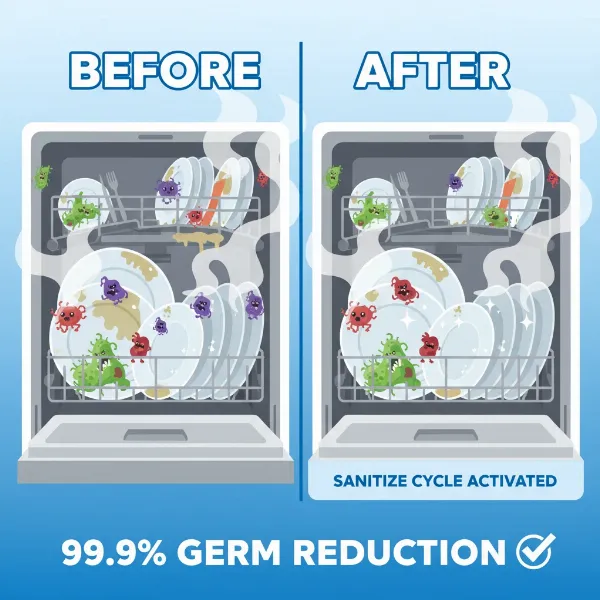 Illustrates how dishwasher sanitize cycle kills bacteria on dishes
Benefits of Utilizing the Sanitize Cycle
Incorporating the sanitize cycle into your dishwashing routine offers a multitude of benefits, extending beyond just visual cleanliness to enhanced health and peace of mind. Firstly, it provides an unparalleled level of hygiene for your kitchenware. This is particularly valuable for households with young children, as it ensures baby bottles, pacifiers, and feeding utensils are impeccably sanitized, reducing exposure to potential allergens and germs.
Beyond baby items, the sanitize cycle is invaluable for effectively cleaning heavily soiled items, especially those that have come into contact with raw meat, poultry, or seafood. It helps prevent cross-contamination by eliminating bacteria that could linger on cutting boards or serving dishes. Furthermore, if someone in your household has been ill, running a sanitize cycle on their dishes can help contain the spread of germs. An added advantage is that the intense heat can also improve the overall cleaning performance, sometimes even helping to remove stubborn stains more effectively than a standard wash.
When and How to Use Your Dishwasher’s Sanitize Cycle Effectively
While the sanitize cycle offers superior hygiene, it’s generally not necessary for every single load. Optimal usage involves strategic deployment for specific scenarios where enhanced germ reduction is most beneficial. Consider using the sanitize cycle after preparing meals involving raw meats to eliminate any lingering bacteria from cutting boards, knives, and serving dishes. It’s also highly recommended during periods of illness within the household to prevent the spread of germs through shared dishware. For general maintenance and occasional deep cleaning of your dishes, running this cycle once a week or every few loads can provide an extra layer of protection.
Be aware that the sanitize cycle typically adds a significant amount of time to the overall wash duration, often ranging from 60 to 90 minutes, and sometimes even longer, depending on the dishwasher model and the initial water temperature. To ensure maximum effectiveness, avoid overloading the dishwasher. Proper loading allows hot water and detergent to reach every surface, guaranteeing thorough cleaning and sanitization. Always refer to your dishwasher’s user manual for specific instructions and recommendations. It’s also wise to routinely clean your dishwasher’s filter and interior to maintain its sanitizing efficacy over time.
 Family loading baby bottles for dishwasher sanitize cycle
Choosing a Dishwasher with an Effective Sanitize Feature
When investing in a new dishwasher, paying close attention to its sanitizing capabilities can be a game-changer for household hygiene. The most reliable indicator of a dishwasher’s ability to effectively sanitize is NSF certification, specifically to NSF/ANSI Standard 184 for residential models. This certification assures that the appliance meets stringent requirements for bacterial reduction.
Look for dishwashers that offer a dedicated “Sanitize,” “Sani-Wash,” or “Sani-Rinse” option clearly labeled on the control panel. Many leading brands are known for their robust sanitize features. For instance, brands like Bosch, GE, Whirlpool, and KitchenAid frequently highlight their NSF-certified sanitize cycles in product specifications, often detailing the specific temperatures achieved. When comparing models, check the product’s specifications or consult the owner’s manual to confirm the sanitize temperature and features. Some advanced models might also offer additional drying enhancements that work in conjunction with the high heat to further inhibit germ growth by ensuring dishes are completely dry. Prioritizing these features will ensure your investment genuinely contributes to a healthier home environment.
Conclusion
The dishwasher sanitize cycle is far more than a marketing gimmick; it’s a scientifically backed feature designed to elevate your home’s hygiene standards. By employing significantly hotter water and extended wash times, it effectively reduces 99.9% to 99.999% of bacteria, offering enhanced protection against foodborne illnesses and a cleaner environment for your family. While not needed for every load, strategic use of this cycle, especially for baby items, raw meat contamination, or during illness, provides invaluable peace of mind. When choosing a new appliance, looking for NSF certification ensures you’re getting a dishwasher that truly delivers on its promise of superior sanitization. Do you regularly leverage your dishwasher’s sanitize cycle, and have you noticed the difference it makes in your daily routine?
Frequently Asked Questions
Is the sanitize cycle the same as sterilization?
|
Our Picks for the Best Dishwasher in 2026
As an Amazon Associate I earn from qualifying purchases.
|
||
| Num | Product | Action |
|---|---|---|
| 1 | Cascade Complete Dishwasher Detergent Liquid Gel, Dish Detergent, Dishwasher Soap, Citrus, 75oz |

|
| 2 | Cascade Platinum Plus Dishwasher Pods, Dish Detergent Soap, Clean Scent, 62 Count |
|
| 3 | COMFEE’ Countertop Dishwasher, Energy Star Portable Dishwasher, 6 Place Settings & 8 Washing Programs, Speed, Baby-Care, ECO& Glass, Dish Washer for Dorm, RV& Apartment, Black |
|
| 4 | EUHOMY Countertop Dishwasher Portable with 6 Programs, 5L Built-in Water Tank for Apartments & RV, 167℉ High-Temp, No Hookup Needed, Mini Dishwasher with Baby Care, Air Dry/Quick/ECO/Fruit/Normal Mode |
|
| 5 | Sharp SDW6504MS Stainless Steel Dishwasher, 24-inch Pocket Handle, 52 dB, Hybrid Tub, 12 Place Settings, 5 Cycles, Heated Dry |
|
| 6 | Honeywell 18 Inch Dishwasher with 8 Place settings, 6 Washing Programs, Stainless Steel Tub, UL/Energy Star- Black |
|
| 7 | BLUELAND 100% Plastic-Free Dishwasher Detergent Tablets, 60 Count, Free & Clear, Eco-Friendly Dishwashing Pods, Natural, USDA Certified biobased |
|
| 8 | Cascade Complete Dishwasher Pods - Fresh Scent ActionPacs, Dishwasher Detergent, Dishwasher Soap, Detergent Pods, 78 Count |
|
| 9 | Kenmore 24" Premium Hybrid Tub Dishwasher - UltraWash, MoreSpace Adjustable Rack, High Temp & SmartWash - 12 Place Settings - 54 DBA - ENERGY STAR Certified - Fingerprint Resistant Stainless Steel |
|
| 10 | COMFEE’ Portable Mini Dishwasher, Energy Star, Countertop, 6 Place Settings, with 8 Washing Programs, Speed, Baby-Care, ECO& Glass, Dish Washer for Dorm, RV& Apartment, White |
|
No, sanitization and sterilization are distinct. Sterilization aims to kill 100% of microorganisms, typically requiring extremely high temperatures (~250°F) or specialized chemicals. The sanitize cycle, however, reduces bacteria to a safe, acceptable level (99.9% to 99.999% reduction), which is sufficient for household dishware and hygiene.
How often should I use the sanitize cycle?
The sanitize cycle is not necessary for every load. It is best used for specific situations such as sanitizing baby bottles, dishes used with raw meat, during times of illness, or as an occasional deep cleaning for your dishes. For general daily loads, a normal wash cycle is usually sufficient.
Can I sanitize plastic items in my dishwasher?
Most dishwasher-safe plastic items can be put through a sanitize cycle. However, prolonged exposure to very high temperatures might cause some plastics to warp or degrade over time. Always check the manufacturer’s recommendations for your specific plastic items to ensure they are high-heat safe.
What if my dishwasher doesn’t have a sanitize cycle?
If your dishwasher lacks a dedicated sanitize cycle, you can still achieve a good level of cleanliness by selecting the hottest wash and rinse settings available. Ensure your home’s water heater is set to at least 120°F (49°C) to maximize the heat during the cycle. While not true sanitization, this will still be effective at reducing many germs.
Does the sanitize cycle use more energy or water?
Yes, because the sanitize cycle requires heating water to higher temperatures and often extends the wash and rinse times, it typically uses more energy and slightly more water than a standard wash cycle. However, the benefits of enhanced hygiene and reduced germ spread can outweigh the marginal increase in utility consumption for specific loads.